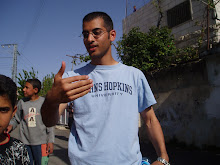
The Harvard Crimson accepted an article I wrote on the US's obstruction of my work in Gaza. If you'd like to read it:
http://www.thecrimson.harvard.edu/article/2010/2/8/gaza-strip-embassy-egypt/
Tuesday, February 9, 2010


Saturday, January 16, 2010
Last Post, and Eight Hours with Israeli Security
1/16
I messed up the post before, it should be for Jan 3, not Jan 4.
Haven't written for a long time, so I'll summarize by date. But here's a quick executive summary:
Was never let into Gaza; met a friend at the US Embassy with whom I traveled to Jerusalem; was held at the Israel-Egypt border for eight hours (approximately doubling my previous record if I remember correctly); left Jerusalem and went to Dahab, a beautiful town on the Gulf of Aqaba, came back to Cairo; waiting for my flight out of Egypt the day after tomorrow. The eight hour holding at the border might prompt a third rule of human rights work, even though I wasn't going to Israel for any purpose other than seeing friends: if your middle name sounds Iranian, get rid of it.
1/4: woke up and went to the American Embassy (for the third time), thankfully it's walking distance from Sara Inn Hostel. I told the American Citizens Service (ACS) Chief what the soldier told me at Rafah, that a new rule says foreigners need the Ministry of Interior's approval to go to Gaza. She looked confused and to my absolute astonishment said she would call the MoI and ask them. She did, then came back and told me they had said they have nothing to do with it, and that I need to contact the Ministry of Foreign Affairs. Hoping to extend this new helpfulness I asked her if she could contact them. She gave me a dirty look and went to do something, then came back a few minutes later with a print out from the MFA's website with their phone number. Thanks.
I called the MFA and they said I needed to contact the Director of Palestine Affairs at the MFA, and gave me his phone number. I called for about half an hour before getting through, and then explained what I was doing and why I wanted to go to Gaza. The lady said the process is very simple now: have your embassy send a fax with two documents. One, a copy of your passport. And two, a letter of explanation, not necessarily from the Embassy itself, explaining why you are going. Approval takes 1-2 weeks.
Sweet! That couldn't be easier, although the timing will be very close. ACS closes at 11 am, so I had to wait until the next day to go back.
1/5: Return to ACS in the morning, meet the ACS Chief again. This is my fourth trip to the Embassy. I told the ACS Chief that I had spoken to the MFA yesterday and that what they need from the Embassy is a letter and my passport faxed from the Embassy to them, and gave her the phone number.
"You're not going to like my response," she said. "But we don't provide that service."
Excuse me? I asked. You don't help Americans communicate with the Egyptian government? (Deja vu all over again, I know).
"We do, but since we don't recommend travel to Gaza we don't offer that service."
It's not a service ma'am, you're the American Embassy and I need to communicate with the Egyptian government, and you need to help me do that.
"We don't do that."
That's ridiculous, yes you do. I have signed the waiver stating I understand the risks and now I need you to provide me with standard consular services.
"We don't do that."
The American Embassy in Egypt doesn't provide standard consular services to Americans in Egypt?
"Like I said, we don't recommend travel to Gaza, and so we don't assist Americans in going to Gaza."
I'm not asking for your assistance or approval in going to Gaza, I am asking you to fax a letter to this phone number which the Government of Egypt has requested from the American Embassy.
"I'm sorry, but we don't recommend travel to Gaza."
I think most people who know me know that I'm a pretty calm person, but it's a good thing there was reinforced glass between this woman and me. If there hadn't been a small child in the room I'm pretty sure I would have started yelling. Which also isn't really fair, it's not like the ACS Chief made this decision, she's just doing what she's told by the State Department.
Regardless, this idiotic exchange continued for about ten minutes. When the woman realized I wasn't going to leave without her doing something she said, "Okay, I'll take this to my higherups and ask them what we can do with it." I said thank you and apologized for getting upset with her before.
When will I hear about a decision?
"Oh, later today."
Good, here's my mobile number in Egypt. Will you call me to let me know what will happen?
"Absolutely."
You can guess whether or not she called.
1/6: Back to the Embassy, this time determined not to get upset no matter what the ACS Chief tells me.
"Okay, we've made a decision. We're going to grommet a copy of your passport to your affidavit."
What does grommet mean?
"We'll attach a copy of your passport to your affidavit."
And then you'll fax it over to the MFA?
"No."
Can I take it over to the MFA?
"I don't know."
And that's the best you can do?
"Yes."
Grommet away.
I knew this was bullshit, quite obviously non-Egyptians can't take papers into an Egyptian governmental office, you need your embassy to communicate with a foreign government. A "grommet" turned out to be two little golden rings that attach something to something else. Quite clearly this is useless.
While I was walking out I heard a tall blond white girl talking about Gaza as well, saying something about "my aid" and not wanting it to fall into the wrong hands in Gaza, meaning into Hamas hands.
As I was walking out she said "sorry, are you trying to go to Gaza too?"
Yes, but the American Embassy is blocking me, and I'm guessing you, from going. Why don't we talk about it outside?
When she kept getting the runaround and finally gave up, she and I headed to a coffee shop called Pottery Cafe in Tahrir Square, a few blocks from the Embassy. Her name's Julia, she's a recent college grad from Jersey who studied Arabic at the American University in Cairo for five months, so she knows the city pretty well and speaks enough Arabic to get by (she's also a 6 foot tall blond, definitely stands out here). She had just returned from Gaza after taking some tens of thousands of dollars in humanitarian aid, mostly school supplies. She had been forced out before all of the aid could be delivered but thankfully she has international friends who'll finish distributing it for her. The money was raised from a mosque and a school in New Jersey, so they definitely need documentation that it was given to anyone but Hamas. We called the Director of Palestine Affairs and arranged a meeting with his office at 1 pm.
We met with a fairly young guy who told us explicitly that no foreigners would be allowed into Gaza from Egypt until at least February.
After that she took me to a part of town called Zemalek, it's where some of the embassies are located and so has several upscale places to smoke sheesha and drink tea. We went to another Pottery Cafe, apparently it's a chain in Cairo, and let out our frustrations on some good sheesha and food.
We got along very well right away, and so decided to try to go to Jerusalem to see friends. I won't write in detail about the trip to Jerusalem, anyone can ask me why in person.
We decided to get the overnight bus to Taba, an Egyptian resort town on the border with Israel where you can cross by land. Julia was worried that she wouldn't be admitted because she had just been in Gaza. I told her that she'd be fine, but that I would have serious problems crossing and that we'd be held at the border for a long time if she traveled with me. She didn't believe me.
The overnight bus to Taba was definitely boring. At one point the bus stopped for almost an hour (and it's a more than 5 hour ride anyway), we couldn't figure out why other than that ambulances were coming up on the side of the road. As we got closer to the accident we noticed that there was cauliflower all over the road. Then we saw it: a large dump truck carrying cauliflower had jackknifed, spilling cauliflower all over the road, and a bus identical to ours had slammed into the truck from behind. It didn't look like anyone was hurt too badly, and the only reason it took so long to pass was because a billion Egyptian men had decided to get out of their cars and walk around aimlessly.
We got to Taba, crossed through Egyptian security in about ten minutes, and then waited for the border to open. Around 7 am we got in line at Israeli security. The instant the woman saw my passport she got on her radio and two security agents rushed over.
"Where is this name from?" they asked.
It's my middle name, it's from my dad.
"What is the origin of your name?"
It's Indian.
"No, this name", they said, pointing to my middle name (Yazdi, very Iranian sounding).
It's my middle name, from my dad.
"Where was your father born?"
My father was born in India (technically true) and my mom was born in Pakistan.
"Okay, wait here."
They brought over an Iranian Jewish security woman to talk to me for about twenty minutes:
"I must ask you some security questions."
No problem, I understand.
"Why are you coming to Israel?"
Because my friend Julia has never seen Jerusalem and since I lived here I wanted to show it to her.
"Why were you in Egypt?"
I was doing research (surprisingly they never asked about my research again).
"What do you do?"
I'm a medical student and a student at the Harvard School of Public Health in the United States.
"A doctor?"
Almost.
"Have you been to Israel before?"
Like I said, yes.
"Why?"
I lived in Israel for eight months after college and I worked in a hospital in Hebron for six weeks.
"Why?"
Why what?
"Why did you work in a hospital in Hebron?"
Because I am a medical student.
"But why?"
I don't understand the question.
"Why in Hebron? Why not in Tel Aviv or Jerusalem?"
Because the West Bank is a third world country.
"Ah, I see. And why were you in Israel before?"
I had just graduated from college and wanted to see Israel.
"Do you know anybody in Israel?"
Of course, I lived here for almost a year.
"Who do you know?"
You want me to tell you every person I know in Israel?
"Yes."
That could take a long time.
"Okay, do you know Arabs?"
Yes.
"Who?"
I'm going to invoke my Fifth Amendment Right against self-incrimination and skip over part of the conversation here. The last question was my favorite though:
"Do you have any weapons in your bag?"
The reader should note that there was no actual security concern, as the only bag they searched was my backpack. They never opened my huge duffel bag. Julia had a book by Edward Said that they examined in detail, while my two books, both highly critical of Israel and Israeli "mythistory" were written by Jews with Jewish names (Sara Roy and Shlomo Sand), and they showed no interest in them.
After this I thought to myself "well, that wasn't bad, maybe we'll get through here relatively quickly!" Clearly I haven't been through Israeli security for too long.
When we got to passport control I realized Julia had a "security cleared" stamp on the piece of paper they give you to go through with, but I didn't have any stamp. I handed the lady my passport and she repeated all of the questions from before. "You wait here now." Great.
I'm not going to go through the whole miserable experience that followed, but eight hours later I was admitted to the State of Israel. Thankfully the Taba border crossing is on the Gulf of Aqaba and they have a little deck that you can sit out on.
I will just note, however, the character of the questions I was asked: who do you know in the West Bank, who do you know in Gaza, and give us their contact information. That was exactly all I was asked. Quite obviously, there was no reason for an eight hour delay. At the end of it they made me sign a document promising I would not enter "areas controlled by the Palestinian Authority" and stated I would be deported from Israel and barred from reentry for ten years if I violated that ban. Hence I won't write anything more about my time in Israel and Jerusalem.
Anyway, after having been awake since 7 am on Jan 6, having taken the overnight bus to Taba, and having sat at Israeli security for eight hours (while Julia kept exclaiming "this is such fucking racism!", I didn't understand why it surprised her), Julia and I jumped a bus to Eilat for several more hours, finally getting into Jerusalem at 10 pm on January 7. We stayed at the Jerusalem Hotel, right next to the American Colony Hotel. Jerusalem Hotel is one of the most beautiful hotels I've ever stayed at, I highly recommend it. Expensive, but at that point neither of us cared. The restaurant attached to the hotel is a favorite hangout for wealthy Palestinians and internationals.
1/11-1/14: Julia and I went to a beautiful and rustic Egyptian town named Dahab, it's apparently one of the premiere places for scuba diving in the world. Saltwater showers, fantastic food, and I bought the most awesome sheesha for about $80 with two boxes of coals, fifteen boxes of tobacco of all sorts of crazy flavors, cleaning brushes, etc. And the guy gave me a half hour lesson on how to prepare a sheesha. Everyone now has a reason to come to our place! The Sinai Peninsula is an amazingly beautiful part of the world, by the way, I highly recommend it.
1/15: We flew from Sharm el-Sheikh to Cairo and went back to Sara Inn Hostel, the guys there were happy to see me again. Cairo remains as crazy as it was before.
1/16: Dropped Julia off at the airport, having been with her pretty much 24/7 for the past eleven days I'm definitely bored by myself. We didn't sleep much last night so I took a nap, was supposed to get up at 11 but definitely got up at 4 pm, sleeping tonight is going to involve diphenhydramine...
I messed up the post before, it should be for Jan 3, not Jan 4.
Haven't written for a long time, so I'll summarize by date. But here's a quick executive summary:
Was never let into Gaza; met a friend at the US Embassy with whom I traveled to Jerusalem; was held at the Israel-Egypt border for eight hours (approximately doubling my previous record if I remember correctly); left Jerusalem and went to Dahab, a beautiful town on the Gulf of Aqaba, came back to Cairo; waiting for my flight out of Egypt the day after tomorrow. The eight hour holding at the border might prompt a third rule of human rights work, even though I wasn't going to Israel for any purpose other than seeing friends: if your middle name sounds Iranian, get rid of it.
1/4: woke up and went to the American Embassy (for the third time), thankfully it's walking distance from Sara Inn Hostel. I told the American Citizens Service (ACS) Chief what the soldier told me at Rafah, that a new rule says foreigners need the Ministry of Interior's approval to go to Gaza. She looked confused and to my absolute astonishment said she would call the MoI and ask them. She did, then came back and told me they had said they have nothing to do with it, and that I need to contact the Ministry of Foreign Affairs. Hoping to extend this new helpfulness I asked her if she could contact them. She gave me a dirty look and went to do something, then came back a few minutes later with a print out from the MFA's website with their phone number. Thanks.
I called the MFA and they said I needed to contact the Director of Palestine Affairs at the MFA, and gave me his phone number. I called for about half an hour before getting through, and then explained what I was doing and why I wanted to go to Gaza. The lady said the process is very simple now: have your embassy send a fax with two documents. One, a copy of your passport. And two, a letter of explanation, not necessarily from the Embassy itself, explaining why you are going. Approval takes 1-2 weeks.
Sweet! That couldn't be easier, although the timing will be very close. ACS closes at 11 am, so I had to wait until the next day to go back.
1/5: Return to ACS in the morning, meet the ACS Chief again. This is my fourth trip to the Embassy. I told the ACS Chief that I had spoken to the MFA yesterday and that what they need from the Embassy is a letter and my passport faxed from the Embassy to them, and gave her the phone number.
"You're not going to like my response," she said. "But we don't provide that service."
Excuse me? I asked. You don't help Americans communicate with the Egyptian government? (Deja vu all over again, I know).
"We do, but since we don't recommend travel to Gaza we don't offer that service."
It's not a service ma'am, you're the American Embassy and I need to communicate with the Egyptian government, and you need to help me do that.
"We don't do that."
That's ridiculous, yes you do. I have signed the waiver stating I understand the risks and now I need you to provide me with standard consular services.
"We don't do that."
The American Embassy in Egypt doesn't provide standard consular services to Americans in Egypt?
"Like I said, we don't recommend travel to Gaza, and so we don't assist Americans in going to Gaza."
I'm not asking for your assistance or approval in going to Gaza, I am asking you to fax a letter to this phone number which the Government of Egypt has requested from the American Embassy.
"I'm sorry, but we don't recommend travel to Gaza."
I think most people who know me know that I'm a pretty calm person, but it's a good thing there was reinforced glass between this woman and me. If there hadn't been a small child in the room I'm pretty sure I would have started yelling. Which also isn't really fair, it's not like the ACS Chief made this decision, she's just doing what she's told by the State Department.
Regardless, this idiotic exchange continued for about ten minutes. When the woman realized I wasn't going to leave without her doing something she said, "Okay, I'll take this to my higherups and ask them what we can do with it." I said thank you and apologized for getting upset with her before.
When will I hear about a decision?
"Oh, later today."
Good, here's my mobile number in Egypt. Will you call me to let me know what will happen?
"Absolutely."
You can guess whether or not she called.
1/6: Back to the Embassy, this time determined not to get upset no matter what the ACS Chief tells me.
"Okay, we've made a decision. We're going to grommet a copy of your passport to your affidavit."
What does grommet mean?
"We'll attach a copy of your passport to your affidavit."
And then you'll fax it over to the MFA?
"No."
Can I take it over to the MFA?
"I don't know."
And that's the best you can do?
"Yes."
Grommet away.
I knew this was bullshit, quite obviously non-Egyptians can't take papers into an Egyptian governmental office, you need your embassy to communicate with a foreign government. A "grommet" turned out to be two little golden rings that attach something to something else. Quite clearly this is useless.
While I was walking out I heard a tall blond white girl talking about Gaza as well, saying something about "my aid" and not wanting it to fall into the wrong hands in Gaza, meaning into Hamas hands.
As I was walking out she said "sorry, are you trying to go to Gaza too?"
Yes, but the American Embassy is blocking me, and I'm guessing you, from going. Why don't we talk about it outside?
When she kept getting the runaround and finally gave up, she and I headed to a coffee shop called Pottery Cafe in Tahrir Square, a few blocks from the Embassy. Her name's Julia, she's a recent college grad from Jersey who studied Arabic at the American University in Cairo for five months, so she knows the city pretty well and speaks enough Arabic to get by (she's also a 6 foot tall blond, definitely stands out here). She had just returned from Gaza after taking some tens of thousands of dollars in humanitarian aid, mostly school supplies. She had been forced out before all of the aid could be delivered but thankfully she has international friends who'll finish distributing it for her. The money was raised from a mosque and a school in New Jersey, so they definitely need documentation that it was given to anyone but Hamas. We called the Director of Palestine Affairs and arranged a meeting with his office at 1 pm.
We met with a fairly young guy who told us explicitly that no foreigners would be allowed into Gaza from Egypt until at least February.
After that she took me to a part of town called Zemalek, it's where some of the embassies are located and so has several upscale places to smoke sheesha and drink tea. We went to another Pottery Cafe, apparently it's a chain in Cairo, and let out our frustrations on some good sheesha and food.
We got along very well right away, and so decided to try to go to Jerusalem to see friends. I won't write in detail about the trip to Jerusalem, anyone can ask me why in person.
We decided to get the overnight bus to Taba, an Egyptian resort town on the border with Israel where you can cross by land. Julia was worried that she wouldn't be admitted because she had just been in Gaza. I told her that she'd be fine, but that I would have serious problems crossing and that we'd be held at the border for a long time if she traveled with me. She didn't believe me.
The overnight bus to Taba was definitely boring. At one point the bus stopped for almost an hour (and it's a more than 5 hour ride anyway), we couldn't figure out why other than that ambulances were coming up on the side of the road. As we got closer to the accident we noticed that there was cauliflower all over the road. Then we saw it: a large dump truck carrying cauliflower had jackknifed, spilling cauliflower all over the road, and a bus identical to ours had slammed into the truck from behind. It didn't look like anyone was hurt too badly, and the only reason it took so long to pass was because a billion Egyptian men had decided to get out of their cars and walk around aimlessly.
We got to Taba, crossed through Egyptian security in about ten minutes, and then waited for the border to open. Around 7 am we got in line at Israeli security. The instant the woman saw my passport she got on her radio and two security agents rushed over.
"Where is this name from?" they asked.
It's my middle name, it's from my dad.
"What is the origin of your name?"
It's Indian.
"No, this name", they said, pointing to my middle name (Yazdi, very Iranian sounding).
It's my middle name, from my dad.
"Where was your father born?"
My father was born in India (technically true) and my mom was born in Pakistan.
"Okay, wait here."
They brought over an Iranian Jewish security woman to talk to me for about twenty minutes:
"I must ask you some security questions."
No problem, I understand.
"Why are you coming to Israel?"
Because my friend Julia has never seen Jerusalem and since I lived here I wanted to show it to her.
"Why were you in Egypt?"
I was doing research (surprisingly they never asked about my research again).
"What do you do?"
I'm a medical student and a student at the Harvard School of Public Health in the United States.
"A doctor?"
Almost.
"Have you been to Israel before?"
Like I said, yes.
"Why?"
I lived in Israel for eight months after college and I worked in a hospital in Hebron for six weeks.
"Why?"
Why what?
"Why did you work in a hospital in Hebron?"
Because I am a medical student.
"But why?"
I don't understand the question.
"Why in Hebron? Why not in Tel Aviv or Jerusalem?"
Because the West Bank is a third world country.
"Ah, I see. And why were you in Israel before?"
I had just graduated from college and wanted to see Israel.
"Do you know anybody in Israel?"
Of course, I lived here for almost a year.
"Who do you know?"
You want me to tell you every person I know in Israel?
"Yes."
That could take a long time.
"Okay, do you know Arabs?"
Yes.
"Who?"
I'm going to invoke my Fifth Amendment Right against self-incrimination and skip over part of the conversation here. The last question was my favorite though:
"Do you have any weapons in your bag?"
The reader should note that there was no actual security concern, as the only bag they searched was my backpack. They never opened my huge duffel bag. Julia had a book by Edward Said that they examined in detail, while my two books, both highly critical of Israel and Israeli "mythistory" were written by Jews with Jewish names (Sara Roy and Shlomo Sand), and they showed no interest in them.
After this I thought to myself "well, that wasn't bad, maybe we'll get through here relatively quickly!" Clearly I haven't been through Israeli security for too long.
When we got to passport control I realized Julia had a "security cleared" stamp on the piece of paper they give you to go through with, but I didn't have any stamp. I handed the lady my passport and she repeated all of the questions from before. "You wait here now." Great.
I'm not going to go through the whole miserable experience that followed, but eight hours later I was admitted to the State of Israel. Thankfully the Taba border crossing is on the Gulf of Aqaba and they have a little deck that you can sit out on.
I will just note, however, the character of the questions I was asked: who do you know in the West Bank, who do you know in Gaza, and give us their contact information. That was exactly all I was asked. Quite obviously, there was no reason for an eight hour delay. At the end of it they made me sign a document promising I would not enter "areas controlled by the Palestinian Authority" and stated I would be deported from Israel and barred from reentry for ten years if I violated that ban. Hence I won't write anything more about my time in Israel and Jerusalem.
Anyway, after having been awake since 7 am on Jan 6, having taken the overnight bus to Taba, and having sat at Israeli security for eight hours (while Julia kept exclaiming "this is such fucking racism!", I didn't understand why it surprised her), Julia and I jumped a bus to Eilat for several more hours, finally getting into Jerusalem at 10 pm on January 7. We stayed at the Jerusalem Hotel, right next to the American Colony Hotel. Jerusalem Hotel is one of the most beautiful hotels I've ever stayed at, I highly recommend it. Expensive, but at that point neither of us cared. The restaurant attached to the hotel is a favorite hangout for wealthy Palestinians and internationals.
1/11-1/14: Julia and I went to a beautiful and rustic Egyptian town named Dahab, it's apparently one of the premiere places for scuba diving in the world. Saltwater showers, fantastic food, and I bought the most awesome sheesha for about $80 with two boxes of coals, fifteen boxes of tobacco of all sorts of crazy flavors, cleaning brushes, etc. And the guy gave me a half hour lesson on how to prepare a sheesha. Everyone now has a reason to come to our place! The Sinai Peninsula is an amazingly beautiful part of the world, by the way, I highly recommend it.
1/15: We flew from Sharm el-Sheikh to Cairo and went back to Sara Inn Hostel, the guys there were happy to see me again. Cairo remains as crazy as it was before.
1/16: Dropped Julia off at the airport, having been with her pretty much 24/7 for the past eleven days I'm definitely bored by myself. We didn't sleep much last night so I took a nap, was supposed to get up at 11 but definitely got up at 4 pm, sleeping tonight is going to involve diphenhydramine...
Sunday, January 3, 2010
Second rule of human rights work, Rafah, and "Free Spirit"

Left: the hottest tourism poster I've ever seen, kind of out of place in Egypt...
1/4
The second rule of human rights work: if everyone going somewhere is something and you're not, and you get asked if you're that thing, lie and say you are.
I read in the news that the border with Rafah would be open today, so I got up early, checked out of Sinai Sun, and headed to Rafah. I had tried to go on Jan 1 as well, but at the first checkpoint, not even five miles out of Arish, the police stopped me and told me to go back. I told them to look at the letters I have and the cop, the only Egyptian I've seen so far who's taller than I am, put his hand on his pistol, got right in my face and said "go...back...Arish." I obliged him.
But today, none of the police checkpoints stopped me. "Yes!" I thought. "The border must actually be open!"
Rafah took about 40 minutes to get to. The driver on the way there didn't speak a word of English, but he and I managed to communicate a little bit. The inevitable "Muslim?" came up, to which I responded as always "no". He looked at me very sadly and (I think) tried to explain that I will go to hell, while he will go to heaven. I really didn't know what to say, so I just said I know, which strangely enough seemed to satisfy him. Afterward I think he tried to ask me if I'm not Muslim because of Osama bin Laden, which made me laugh. The guy had a little embroidery piece hanging from his mirror: a Star of David.
The drive from el-Arish to Rafah is through several dusty towns, each of which seems poorer than the last. Rafah itself doesn't seem to be much more than a small town and a huge militarized border crossing. I'm quite sure the ratio of soldiers to non-soldiers there was about 5:1, and these guys were armed as if the Soviets were invading. Quite different from the 5'4'' guys who weigh 120 lbs and have clothes that are way too big for them directing traffic in Cairo with their thirty year old machine guns.
When I got to Rafah this was the scene: about one hundred people, some with a bunch of luggage and some with a backpack, standing and sitting on the side of the road about 150 meters from the enormous Rafah Gate, the crossing into Gaza, where all the soldiers were. I just stood amongst everyone, waiting, not really sure what was going to happen. While standing around a young guy came up to me and started asking me questions, to which I gave my standard reply. "Ah, speak English?" He was maybe 16 years old, very pleasant, named Hosni. ("The big boss!" he said; Egypt's president/dictator is Hosni Mubarak.)
Him: Where you from?
Me: From America, but I am Iranian.
Him: Ah, welcome! I love America, and I love Iran!
Me: Shookrun! I love Egypt and I love Palestine! [He had told me his dad is Egyptian and his mother Palestinian]
Him: Why?
Me: Ehhhhh...?
Him: Why love Egypt?
Me: Uh... Egypt is very nice? (It was almost a question, really I have to say I could have done without Egypt in life.)
Him: What? Donkey here, jesh [army] there, what nice?
Me: Ah, okay, Egypt nos nos? [Egypt is kinda alright?]
He and I carried on like this for a while. He exclaimed "everyone here my friend!" and then claimed to know every single person waiting to get across the border. "Really?" I asked. "Yes. Some okay. Some bad. But all, ah, friend. You come, please." Then he picked up my bag and walked about five meters up the road to two women who were waiting.
When we got to them he said something in Arabic, and then one of them said "ah, you are from America?" Why does everyone speak English all of a sudden?
She and I chatted for a while. Again I told her I am American and Iranian (explaining "I'm Iranian ethnically, kind of, well you see..." is just too much here) and she said "Ah, I like Iran better!" I asked "but American people?" And she hastily added, "No, I love American people! Only not like American government, so bad!"
We talked about politics for a little while ("We have no problem with Shia or Sunni, in Gaza Muslim and Christian live together, and even no problem with the Jewish", "What has Obama done? What is the change?"), she mentioned about five hundred times that her daughter speaks excellent English, is beautiful ("like her mother!" she exclaimed, and then giggled hilariously), is 22 years old, and has one year left on her pharmacy degree at al-Najar University (I think it's al-Najar, whatever the Palestinian national university is), etc.
She has four kids, one has a Ph.D. in law and lives in New Jersey, one lives in Dubai with her husband, who manages a company owned by an Iranian guy ("Musavi, but he a good!"), and two studying in Gaza. One goes to the Islamic University, the laboratories of which had been modernized by donors just a few years ago and which were bombed by Israel during Op Cast Lead (they were being used to "develop Hamas weaponry", which explains Hamas' amazing military capabilities during that operation). I think she said he's studying engineering. The other is the 22 year old daughter.
"I hate to go to Gaza" she says, despite the fact that it's where she was born. She kept repeating a phrase in Arabic that I didn't know the meaning of and saying she didn't know how to explain it in English. Finally she said, "I think, it is not good for the human."
"For the human rights?" I asked.
"No, not for the human rights. But also not for the human. Even not for the dog." she replied.
At that point an old man whose right had was gone asked me for money, so I gave him the 2 LE I had in my pocket. He had his sleeve over his stub so I wasn't sure, I asked the kid (who was still standing next to me, not saying anything) "his hand is gone?" Hosni told me he lost it during Cast Lead, and that he used to be a stone worker, but with his right hand gone he's reduced to begging.
The lady and I talked about some other stuff that I can't remember, then the buses came. The buses take people to the first gate in the Rafah Gate, where they check everyone's IDs. For some reason people aren't allowed to walk to the gate, they are required to get on this bus and pay 10 LE for no reason that I can discern.
When the buses arrive, all the young people who aren't waiting to cross make the most insane dash for everyone's luggage I've ever seen. The instant the buses pulled over, the road - which had been almost silent other than me and the lady talking - exploded with human activity. Every piece of luggage was thrown into a large wooden and metal cart being pulled behind the bus, and by thrown I mean launched. Somehow these kids (none of them could have been over 16) remembered whose bags they had thrown into the cart, then got on the bus and harassed those people for money, the going rate seemed 2 LE for a small bag and 3 LE for a big bag. That was another thing the lady brought up while we were talking: "In Egypt, everyone want money for everything. They think everyone who come from outside have so much money! Where to get money from. Even for the toilet!" (I've had to pay to use the bathroom many times, and you definitely don't enjoy the experience...)
Anyway, when they checked IDs on the bus they told me to get off. "Are you Palestinian?" Violating the second rule of human rights, I was honest and said no, and then I argued with the soldier (who again spoke English) for ten minutes that it makes no sense to say "today only for Palestinians." He insisted he can't do anything about it and that I have to go to the Ministry of Interior now to get a permit. Fantastic.
I met two Egyptian guys, one was sending his wife to Gaza to see her family, the other was sending his sister to Gaza to see her husband's family. Again, both spoke more than enough English to get by. Us three and another guy who was taken off the bus by the Egyptians and then had a shouting match with them all took a taxi back to el-Arish. The two guys stayed in Arish I think, I took a shared taxi to Cairo (40 LE, not bad), and I think the other guy took a shared taxi to Ismalia, a city just west of the Suez Canal I think.
On the taxi ride to Cairo it was pretty much all Egyptian students and me, we all had a good time piecing their English together to communicate with me. The inevitable "Muslim?" came up, this time I decided to say yes just to see if there would be a different response. "Welcome." That was it. I was disappointed, I was hoping for a ceremony of some sort, preferably involving an elephant.
Half way through the taxi ride the taxi broke down; this was in the middle of the Sinai desert. Not at all bothered by it, the driver got out, tinkered with the engine for a while (I suspect it just had to cool off), and then, after half an hour, started it and drove until Ismalia. In Ismalia he stopped to get the car handwashed (it was the oldest functioning car I've ever been in, it had literally zero door handles that worked from inside the car and only one window roller handle left intact), so we sat around, smoked and drank tea, while the car wash guys poured dirty soapy water all over the car and then wiped it down until it sparkled in the sun. Actually it was still the same faded red it was before, but oh well.
Then from Ismalia to Cairo. From Cairo I got a taxi to Cecilia Hostel again, but unfortunately they were full. They sent me to a place about three blocks away called Sara Inn Hostel, here I have a dorm room for I think 60 LE per night, not bad. The shower here is fantastic, and it made me super happy.
I called a friend I was introduced to by email through another friend, and he and I met up. There was a film screening for a movie called Gaza On Air, I hope I can get it and show it at HSPH when I get back. No foreign journalists were allowed into Gaza during (or for the two weeks before, illustrating again that the attack was meticulously planned and timed) Cast Lead, for obvious reasons. There were Palestinian journalists in Gaza though, and they shot amazing and truly horrifying footage of what unfolded in those 22 days.
After that we went to a fish place for dinner with another friend of his from Belgium, a quirky blond whose name I can't remember. She told us about how she cycled through Tibet, I think she said three or four years ago, it was the craziest thing I'd ever heard.
Oh, and "Free Spirit". So when I got to Sara Inn Hostel I got a bed in the dorm room, nothing else was left and I really didn't care. Like I said, the shower was unbelievably amazing. I'm wearing new clothes for the first time in five days, incidentally; I have been doing everything I can to avoid unpacking just to repack, and I definitely smelled like I'd been riding around on Egyptian public transport for a week.
Anyway, right before I was going to go take a shower this tall white guy walks into the dorm room. "Hello" I said, "my name's Feroze."
"Free Spirit, hi."
I knew he had just told me his name is "Free Spirit", but I thought "maybe he thinks I said my name is 'Free Spirit'", so I asked him again "sorry, what's your name?"
"Free Spirit."
Uh, okay. "Where are you from?"
"Oh I'm from the UK originally."
"Cool, what are you doing in Egypt."
"I came here to do some research actually."
"Oh really? Me too, but in the Gaza Strip. What are you doing research on."
"I'm trying to show how various E.T.s were involved in building the pyramids."
"Like, extraterrestrials?"
"Yeah. I had several shaman experiences two months ago and made contact with some E.T.s. Most of us can't contact them because we're not vibrating at high enough level, because we're worried about money or something like that."
"Yeah, I can't communicate with E.T.s."
"Yeah, so I'm here to look for aliens painted into the hieroglyphics. The E.T.s I contacted told me I should come here to look for proof of their existence, so I did. Oh I also took an incredibly cheap Nile River cruise today for 10 LE, it was really quite amazing."
So basically I have either a schizophrenic or, and I'm guessing this is the actual case, manic guy sleeping across from me in the dorm. I'm guessing he's manic because he must have had some money and wherewithal to make it to Egypt in the first place, doesn't seem likely for a 35 year old schizophrenic.
Anyway, that was January 4 for me. It's 1:30 in the morning and I'm going to the embassy for the third and, I sincerely hope, last time tomorrow, and hopefully then to the Egyptian Ministry of Interior. All of this would really be simpler if the embassy just stopped pretending it can't give the Egyptians orders...
Friday, January 1, 2010
el-Arish for New Year's Day
12/31
Got up around 6, walked around and got breakfast at a small restaurant. A beef and onions in a small pita thing cost 2.75 LE, it was pretty decent. Not much else opened up until 8 or 8:30, very different from Cairo where people are running around constantly.
Walked out to the beach, it was very pretty aside from the garbage that's strewn everywhere. An American aid program would probably win hearts and minds by paying people to clean the entire country and by purchasing trashcans and organizing an effective garbage collection system.
There was one couple walking around the beach, the woman fully covered while the guy dipped his feat in the water, which I assume was pretty cold. There were quite a few fishing boats as well going around everywhere, it was very picturesque. There were also a bunch of pagoda-looking things that jutted out into the water, around them were rocks and what I think must have been landing barriers that are no longer in use. The peace dividend, perhaps. I took a bunch of pictures of the beach, including some strangely out of place graffiti, but forgot to put them on my thumb drive before heading to the cybercafe.
Just bummed around for the rest of the day. I've been reading Sara Roy's Failing Peace while here. It's a collection of her peer-reviewed articles from various journals and five original chapters, it's very illuminating. Roy is a Harvard political economist and an expert on political Islam, and is also the world's leading expert on the effects of the Israeli occupation on the Palestinians. Her book The Gaza Strip: the Political Economy of De-Development is one of the most important I've ever read vis-a-vis the Palestinian-Israeli conflict. This one essentially updates her theory of de-development as it applies to Palestinian society and the economy through the Oslo years and into the second intifada.
Anyway, will try Rafah tomorrow...
Got up around 6, walked around and got breakfast at a small restaurant. A beef and onions in a small pita thing cost 2.75 LE, it was pretty decent. Not much else opened up until 8 or 8:30, very different from Cairo where people are running around constantly.
Walked out to the beach, it was very pretty aside from the garbage that's strewn everywhere. An American aid program would probably win hearts and minds by paying people to clean the entire country and by purchasing trashcans and organizing an effective garbage collection system.
There was one couple walking around the beach, the woman fully covered while the guy dipped his feat in the water, which I assume was pretty cold. There were quite a few fishing boats as well going around everywhere, it was very picturesque. There were also a bunch of pagoda-looking things that jutted out into the water, around them were rocks and what I think must have been landing barriers that are no longer in use. The peace dividend, perhaps. I took a bunch of pictures of the beach, including some strangely out of place graffiti, but forgot to put them on my thumb drive before heading to the cybercafe.
Just bummed around for the rest of the day. I've been reading Sara Roy's Failing Peace while here. It's a collection of her peer-reviewed articles from various journals and five original chapters, it's very illuminating. Roy is a Harvard political economist and an expert on political Islam, and is also the world's leading expert on the effects of the Israeli occupation on the Palestinians. Her book The Gaza Strip: the Political Economy of De-Development is one of the most important I've ever read vis-a-vis the Palestinian-Israeli conflict. This one essentially updates her theory of de-development as it applies to Palestinian society and the economy through the Oslo years and into the second intifada.
Anyway, will try Rafah tomorrow...
Thursday, December 31, 2009
Second try: success! And an Arabic lesson from an American Jew

Left: the drink the guy on the bus was laughing hysterically about. The other side has the Arabic, it's spelled the same way I spell my name.
12/30
Checked out early to try the bus to el-Arish again. Same time, 4:30, 30 LE. Somehow I sat one row in front of an Asian guy, I think he was Japanese, without even noticing. I heard him speaking English after a few minutes and realized I was once again violating the first rule of human rights work.
Got to the first checkpoint at 6:45 (times from memory, on why see below). They took the Asian guy and the Arab guy sitting next to him off the bus, I assume they were here for the Gaza Freedom March. Again, the soldiers didn’t ask for my passport, and that British guy was nowhere to be seen, so we continued on.
Got to the second checkpoint at 7:25. A uniformed soldier got on the back and asked for everyone’s IDs. I pretended not to understand him, so he repeated himself, and I got my passport out, thinking “Damn it, back to
Got to the third checkpoint around 8:30. Again, they asked for everyone’s ID, this time the guy was in plainclothes. I opened my passport to the visa page and he just looked at it confused, flipped through the pages and found my picture, and then handed it back to me. It reminded me of being in
Got to the fourth checkpoint, right on the outskirts of el-Arish, and they again asked for everyone’s ID. Again, the guy was in plainclothes. I showed him my passport and he asked me to get off the bus. “Damn it, now I’m really going back to
Nobody at the outpost spoke enough English to communicate with, they just kept saying “tourist?” And I kept saying “no, student.” I don’t know why I didn’t just say yes I’m a tourist, but I figured there’s no point in getting arrested for lying. Plus I said I was here for the purposes of study when I landed. Since little information was being exchanged I said, “Shouf” (look), and handed them the letter from Harvard that I’d had translated. Never again will I say Harvard’s name isn’t worth anything.
The guy who had taken me off the bus found two other people to read the letter with, and when they figured out what it said the guy called someone on his cell phone, which I thought was hilarious. No pretense that this military checkpoint is for military purposes, otherwise you’d obviously want a secure connection to whatever base you’re calling.
I think they kept me at the checkpoint for about an hour, nobody was ever rude or aggressive. During that time I met a Jordanian in his early twenties who studies engineering at
I sat around smoking with the soldiers, who laughed at my every attempt at Arabic, it was quite enjoyable aside from the surrounding circumstances. After about an hour, they said “please, you go Arish” and sent me on my way. They flagged a taxi down for me, told the driver to go to Sinai Sun where I told them I’m staying, and sent me off.
One thing I noticed: there’s no pretense that, because they took me (or anyone else) off the bus they should accommodate me in getting to el-Arish. For the old man going to Arish, they flagged down the next vehicle that went by, a supply truck of some kind, and just told the driver to take him to el-Arish. For the engineering student, they flagged down a flatbed truck that he then had to jump in the back of (it must have been absolutely freezing to drive the ten or so miles we were from
Got to Sinai Sun. It’s exactly how it was described on the Internet: a “quirky three-star”. The bathroom has a small open sewage pit, my eyes burn just being in the room, for some reason there’s a refrigerator in my room that’s bigger than the closet, the TV is smaller than my laptop, the pillow feels like it’s made out of boxing gloves, the blanket feels like it’s made of sandpaper, only one of the outlets in the room works, and there’s a bare light bulb hanging from the ceiling. None of the surfaces have been cleaned in quite some time judging from the thick dust layer. But, it costs 50 LE per night, which is less than the hostel in
I was exhausted at the end of the trip across the Sinai, I wanted to go to Rafah in the morning since I figured my luck was on a role, but it was a little too much. I’ll try going tomorrow early in the morning, even though it’s Friday (the Arab weekend is usually the end of Friday and Saturday). Hopefully it’ll work, otherwise I’ll just come back here and extend my stay by two days, then try again on Sunday.
And the Arabic lesson: apparently Egyptians won't understand "anna mbkeesh arabi" because that's Palestinian Arabic. According to Matt Cassel, I should be saying "anna btkalam arabi". Ugghhhh...
Tuesday, December 29, 2009
Stuck in Cairo
 Left: View of Cairo from the hostel roof. Every apartment building roof is covered with satellite dishes.
12/28
Woke up at 6 am and ate breakfast at the hostel (which they provided: one hardboiled egg and two pieces of bread with some jam and spreadable cheese, woohoo!) and then had another breakfast from a street vendor. The conversation went something like this:
Me: Saba alkhrer (good morning).
Him: Saba anoon (the response to "saba alkhrer")
Me: asaf, anna mbkeesh arabi (sorry, I don't speak Arabic)
Then I pointed to what someone else was eating, having no idea what it was. The vendor just laughed and gave me what I assume was the same thing. It was some vegetables and in bread with some kind of sauce, it wasn't bad. I still haven't seen anyone selling koshery, I heard it was everywhere in Cairo.
There's a big Starbucks-looking store across the street from the hostel called Costa Café, I went in and got a coffee. It's amazing how much I miss brewed coffee, the only thing available in most of the Arab world is instant coffee, and bad instant coffee.
Headed to the embassy again, which thankfully was only five minutes away from the hostel (five pound cab ride, less than a dollar). At the end of the street that the hostel is on there's a McDonalds, next to a Pizza Hut, next to a KFC, next to a Hardees. Who thought it was a good idea to open a Hardees in Egypt? Other than the McDonalds all of them were empty.
I told the embassy staff what had happened yesterday, and they said I should have contacted the Egyptian embassy before I left the US (which of course I did, and they said I didn't need to do anything beforehand) to get their permission to go to Gaza.
I told them the Egyptian police had said I need special permission from the Egyptian government to travel to el-Arish, and that since I don't know how to contact the Egyptian government myself I'm coming to my embassy so they can help me do so.
"No, we can't do that."
My embassy can't help me liaise with the government of the country in which the embassy is located?
"No, I'm sorry."
Isn't that why we have an embassy, so you can help Americans in foreign countries contact the government of that country when they need to?
"No, we don't do that."
The American embassy in Egypt doesn't help Americans communicate with the Egyptian government?
"Not for going to Gaza."
But you said you can provide consular services when I'm still in Egypt, just not when I'm in Gaza.
"No, we can't."
So apparently the American embassy isn't just powerless when it comes to Americans on the Gaza side of the Gaza-Egypt border, it's even powerless to help Americans in their office in Cairo contact the Egyptian government. Be warned people: the United States of America is officially the most helpless country in the world.
To be fair, I'm sure the staff was told to tell anyone inquiring about anything related to Gaza that they can't help. After a while (I think when they realized I really am not part of the march and wasn't just lying to them about it) the staff suggested I get the letters from Harvard and the Mezan Center translated so that I can show them to the soldiers on the way to el-Arish and at Rafah, so I did that across the street in a lawyer's office. I'm pretty sure the guy who runs the place had his twelve-year-old daughter do the translation, he didn't speak a word of English (and she didn't speak much more, hopefully the Arabic letter makes some sense).
Other than that, I just sat around the hostel all day. I don't have much interest in spending money in Cairo, and I certainly don't want to go alone to see Giza. Getting around the city is quite expensive, especially when you ask to go to a hotel or another tourist destination, as is admission to the tourist attractions themselves. If I'm going to spend money anywhere here I'd rather it be Gaza. I wouldn't mind going to see that October War Museum I passed in the taxi on the way to al-Maza, but I'm guessing it's not all that informative.
While sitting around the hostel some woman from Montreal came in and, once again, started yelling at everyone because they didn't find her reservation instantaneously. "This is not a hard job!" she yelled. I really don't understand how Egyptians put up with this crap. When they finally did find her reservation they had given her room away because she had made the reservation over the Internet, but hadn't paid a deposit. "Nobody told me to make a deposit!" They kept apologizing to her and said they would put her up in another hostel where there is room.
"And now I have to carry my bag over there!? It is very heavy and I am tired!!" she yelled. "And to pay for a cab!" No, they said, we'll pay for your cab and carry your bag.
"But now I must go somewhere else!" What else can we do ma'am?
The staff walked out of the lobby to call a cab, so I tried to make small talk with the lady. "Where did you come in from?" She replied "Montreal" but in the slurred way of Quebecois French, and I was expecting a country name, so I didn't understand her.
"Sorry, from where?"
"FROM CANADA!" she screamed.
"Uh huh. Thanks." Canadians in Montreal definitely do not act like that towards each other.
The hostel doesn't have space for me for tonight, so I found a cheap hotel (the Pyramids Egypt Hotel) for $50/night. I was worried they would charge me taxes and fees above and beyond that but they didn't, and they provide a free breakfast, and they're in downtown Cairo, so I figure I can just walk around here and smoke sheesha until I'm actually able to get in to Gaza.
As far as what I'm going to do about going to Gaza: the embassy, despite being annoying as hell, told me that all of this will probably blow over after December 31 (I think the march was scheduled for New Year's Eve), and suggested I go then. I'm going to call the Egyptian embassy in DC today, I just need to figure out how to make international phone calls here.
Monday, December 28, 2009
First try, or rule number one of human rights work
12/27
The first rule of human rights work is don't sit near other foreigners on the bus, especially if the locals all think you're one of them.
Checked out of Novotel and took a cab to the US Embassy in the morning. To go to Gaza the embassy asks that you sign a waver that says you understand a) they don't want anyone going there, b) they won't help you there, and c) people get stuck there all the time and they can't do anything about it. The weak little State Department wants to help, but what power could they possibly have over the mighty Egyptians?
I'd never been in an embassy before, the security is tight but not as strict as I expected. The major security investment seems to be in keeping car bombers away from the embassy buildings, probably wise. The embassy staff, all Egyptians, were very polite and helpful, even though everyone's astonished response to why I was in Egypt was: "to study...in Gaza?"
In the American Citizens Service waiting room I met a woman and her maybe thirteen-year-old daughter who had been in Egypt for nine months for no reason they could explain other than that they wanted to be. I asked her how her daughter was continuing in school and she just said "oh, yeah, they wanted to put her in school, but here they don't mix boys and girls." I wasn't sure what that had to do with anything. She then went off on Egyptians for breastfeeding in public: "it's so fucking disgusting." Her father had died just before Christmas and so she wanted to go back to the US, but she couldn't afford to do so, and so had come to the embassy to see if they could get her back. I think they did, she looked hopeful when I was leaving.
After the embassy I headed to the central bus station, al-Maza, and got a bus to el-Arish. I was planning on staying in a hotel there, then heading to Rafah the next morning. On the way there the cab driver, not accepting that I don't speak Arabic, kept pointing to something on the right. It looked like a military museum so I just said "ah, good", but then I realized it was a museum specifically devoted to the 1973 War. I've read (and can believe) that this war was a defining moment in modern Egyptian history, so I became more enthusiastic and said "ah, mabruk!" ("congratulations"). I think he was trying to tell me that he fought in the war, given his age I could believe it. He had a huge smile on his face.
On the bus I had the unpleasant experience of meeting European activists. They mean well I presume but I found them incredibly annoying and truly obnoxious. The first one was a Frenchman of Algerian descent; he probably weighed 250 lbs and thought everyone was his best friend. He started off speaking to me in Arabic, then in English. "I feel sorry for American people. Because I am from France. And because I am in France we have the truth." I wanted to punch him in his fat face, an Algerian should know full well the character of the French intelligentsia.
"You know what is the worst government in the world? It is not Iran, no. And it is not, uh, Chavez, it, umm, Venezuela. No, it is the American Zionist government." I hadn't said a word about Iran or Venezuela; actually, I hadn't said a word beyond "ana amriki".
"Yes, it is this. Because, I went to Iran. I spoke with a historian and he explained everything to me, he told me that these people who say to have a beard, to make women wear the hijab, he told me that they are not from Iran, they are from the Occident," meaning the West. I'm no fan of the nonsense we hear about Iran in the US, but what the hell was this guy talking about? The US has certainly been at the forefront of funding, training and organizing fundamentalist Islamic crazies, but I'm pretty sure Osama bin Laden is still an Arab.
The Algerian Frenchman was sitting next to a sixty-something-year-old British man who lives "on the Mount of Olives". At one point the Egyptian law student I mention below asked him "where you are from?" The guy responded "Jerusalem." The kid asked, "where?" The guy said again, "Jerusalem." The kid asked again, "from where?"
The British guy then flew into a rage, screaming at the kid "I'M FROM JERUSALEM! SURELY YOU'VE HEARD OF JERUSALEM! I LIVE ON THE MOUNT OF OLIVES!! IN YIS-RAEL!" which he pronounced with a condescending hiss, assuming the kid was trying to get him to say "al-Quds" or "Palestine" or something. The whole bus was turned around looking at him. He apparently didn't understand that even Israelis who don't speak English won't understand "Jerusalem", it doesn't sound like "Yeru-shelaim", which is how it's pronounced in Hebrew and Arabic.
So I said, "min al-Quds", ("from Jerusalem", al-Quds is the Arabic name for the city), and the kid just, apparently not at all picking up on the British guy's hostility, says "ah, Yerushelaim! I want to say [meaning pronounce] like Arabic way! Hehe!" To which the British guy shook his head in disgust, for absolutely no reason.
The British guy kept going on and on about "seeking justice" which he claimed is a phrase that appears over and over again in the Bible, but which I certainly don't recall (granted, I haven't read the Bible in quite some time). That British man is my least favorite person in the world at the moment, see below on why.
The young Egyptian I mentioned above had just graduated from law school. His English was broken but we could definitely communicate, and he was rather interesting. He wasn't afraid to say how much he hates the Egyptian government and Mubarak in particular. "I love law!" he kept saying; Richard Goldstone would have been proud if it had stopped there. His problem with Egyptian law was that it doesn't take Sharia law as its main input, but instead as one of many. He went into a long explanation of how, why and under what circumstances someone's limbs should be amputated if they are caught stealing, what the punishment for adultery should be, etc. I just listened.
Like most Arabs do in my experience, he started asking about the US, and what the American people think of Arabs, about Islam, etc. I told him honestly that most Americans don't know anything about Arabs or Islam other than what they hear on the news, which is almost always negative. But Americans also have common sense, and if you speak to them you usually find out that they find it hard to believe that all Arabs and all Muslims are just crazed lunatics.
We crossed over the Suez Canal; it was dark so I couldn't really see anything. Thirty minutes east of the Suez we came to a police checkpoint. Two cops, one plainclothes, came on the bus and essentially took everyone they thought was a foreigner off. They didn't ask for my passport and I didn't offer it, and the old British guy just kept pretending he didn't understand that they wanted him to get off the bus. We waited for probably half an hour while they argued with the foreigners outside (someone from the bus translated I think). After a while the cops came back on the bus to collect the old man, who again pretended he didn't understand. Again, didn't ask for my passport and I didn't offer it. The guy I had been talking to, the lawyer, started speaking to me in English and I told him to shut up.
Finally the cops brought someone with them who spoke English perfectly (another plainclothes policeman, it turned out later), who told the old man very explicitly that he needed to get off the bus. He huffed and puffed and then points at me and says "Well why doesn't he have to go?" They looked at me and started speaking in Arabic, and then I had no choice but to get off the bus with him. I couldn't believe how unbelievably stupid that guy was. Some people have absolutely no sense. The cops were all polite, to their credit; if I had to deal with these people in any oppositional way I would have lost my temper in about five minutes.
Off the bus it turned out there were two Germans, two French (including the Algerian windbag), this British guy, a Spanish woman, and me. The Brit goes up to the cops and starts yelling in English (which only one of them understood well enough to translate, which he didn't do) "I'm very upset! Who do I complain to?!", apparently not realizing he was standing in the Sinai. I'm opposed to murder, but if the Egyptians had asked someone to execute him I might have volunteered.
The Algerian guy, meanwhile, was screaming at the soldiers (in English; not sure why given that he spoke Arabic) "I'm going back to Cairo and getting right on a plane! I won't give Mubarak one more cent!" I'm sure the soldiers were devastated? Then he lays his prayer mat down, washes his hands and feet, and starts praying.
The soldiers (it was actually a military checkpoint, the cops were there for foreigners specifically it seems) flagged down a bus heading back to Cairo and we got on, paid another 20 Egyptian pounds (a little more than three dollars), and then waited another twenty minutes. I couldn't figure out why.
After twenty minutes, the Algerian Frenchman got on the bus. The bus driver came over to him and asked him for the twenty pounds the bus costs, and the guy literally threw four five pound notes at him, as if it was his fault he had to get off the bus to el-Arish. Then he starts yelling at four random people on the bus "I was praying! I was praying! And they made me come to the bus!"
I met another guy on the bus back to Cairo, a young swim coach and physical trainer (from what I gathered), going to Cairo from el-Arish to visit his family. He spoke about 20 words of English, and I speak about 20 words of Arabic, yet somehow we were able to communicate for two hours like this. I couldn't get him to understand "student doctor" so I just gave up and told him I'm a doctor (sorry Dr. Clare), so he called me "doctor Fairooz" for the rest of the trip, and would then burst into hysterical laughter. Apparently "fairooz" in Egypt is a soft drink of some kind (Palestinians, on the other hand, always say I have a woman's name because of a famous Lebanese singer, Fairooz). He was a really nice guy; "we make friend!" he kept saying and then grabbing my hand or leg in the typical Arab way. He gave me his phone number, even though there's no possible way we could communicate over the phone, and kept telling me to call him. I think he even offered to smuggle me to el-Arish, how wasn't clear, but I wasn't really interested in any case.
We reached another police checkpoint, this time they wanted everyone on the bus to open bags (apparently large amounts of drugs are smuggled from Sinai to Cairo, who knew?). The German woman, the only European who hadn't been ridiculous up to that point, got out and started complaining to the soldiers "I am a free citizen! Of a free country!" They laughed, probably because she was making a fool of herself. They kept looking at me and speaking in Arabic, I couldn't understand them but I just kept saying "magnoon" and shrugging ("crazy", or my best approximation) and giving them cigarettes. Eventually she opened her bag of course, just like everyone else did.
The taxi ride from al-Maza was too ridiculous to describe. Needless to say it did not improve my image of these people that they had no idea where "hotel Cecilia" was, and that they were furious with the driver because he didn't know where it was, either. It's the top floor of a nondescript apartment and office building with a sign the size of my laptop, why the hell would anyone know where it is? The guy drove us around for an hour and they wanted to give him 50 pounds, less than $10, so I gave him an extra 50. (To be fair, they were nice about it afterward and each gave me 10 pounds more.)
I stayed at their hostel (Cecilia "hotel"); 70 pounds (as opposed to 1000 pounds at Novotel).
All in all: today was a waste of time. I could have done without meeting the foreign contingent, and without the five hours of wasted bus travel. The latter was to be expected on this journey, but not the former. I think it might have constituted cruel and unusual punishment.
The first rule of human rights work is don't sit near other foreigners on the bus, especially if the locals all think you're one of them.
Checked out of Novotel and took a cab to the US Embassy in the morning. To go to Gaza the embassy asks that you sign a waver that says you understand a) they don't want anyone going there, b) they won't help you there, and c) people get stuck there all the time and they can't do anything about it. The weak little State Department wants to help, but what power could they possibly have over the mighty Egyptians?
I'd never been in an embassy before, the security is tight but not as strict as I expected. The major security investment seems to be in keeping car bombers away from the embassy buildings, probably wise. The embassy staff, all Egyptians, were very polite and helpful, even though everyone's astonished response to why I was in Egypt was: "to study...in Gaza?"
In the American Citizens Service waiting room I met a woman and her maybe thirteen-year-old daughter who had been in Egypt for nine months for no reason they could explain other than that they wanted to be. I asked her how her daughter was continuing in school and she just said "oh, yeah, they wanted to put her in school, but here they don't mix boys and girls." I wasn't sure what that had to do with anything. She then went off on Egyptians for breastfeeding in public: "it's so fucking disgusting." Her father had died just before Christmas and so she wanted to go back to the US, but she couldn't afford to do so, and so had come to the embassy to see if they could get her back. I think they did, she looked hopeful when I was leaving.
After the embassy I headed to the central bus station, al-Maza, and got a bus to el-Arish. I was planning on staying in a hotel there, then heading to Rafah the next morning. On the way there the cab driver, not accepting that I don't speak Arabic, kept pointing to something on the right. It looked like a military museum so I just said "ah, good", but then I realized it was a museum specifically devoted to the 1973 War. I've read (and can believe) that this war was a defining moment in modern Egyptian history, so I became more enthusiastic and said "ah, mabruk!" ("congratulations"). I think he was trying to tell me that he fought in the war, given his age I could believe it. He had a huge smile on his face.
On the bus I had the unpleasant experience of meeting European activists. They mean well I presume but I found them incredibly annoying and truly obnoxious. The first one was a Frenchman of Algerian descent; he probably weighed 250 lbs and thought everyone was his best friend. He started off speaking to me in Arabic, then in English. "I feel sorry for American people. Because I am from France. And because I am in France we have the truth." I wanted to punch him in his fat face, an Algerian should know full well the character of the French intelligentsia.
"You know what is the worst government in the world? It is not Iran, no. And it is not, uh, Chavez, it, umm, Venezuela. No, it is the American Zionist government." I hadn't said a word about Iran or Venezuela; actually, I hadn't said a word beyond "ana amriki".
"Yes, it is this. Because, I went to Iran. I spoke with a historian and he explained everything to me, he told me that these people who say to have a beard, to make women wear the hijab, he told me that they are not from Iran, they are from the Occident," meaning the West. I'm no fan of the nonsense we hear about Iran in the US, but what the hell was this guy talking about? The US has certainly been at the forefront of funding, training and organizing fundamentalist Islamic crazies, but I'm pretty sure Osama bin Laden is still an Arab.
The Algerian Frenchman was sitting next to a sixty-something-year-old British man who lives "on the Mount of Olives". At one point the Egyptian law student I mention below asked him "where you are from?" The guy responded "Jerusalem." The kid asked, "where?" The guy said again, "Jerusalem." The kid asked again, "from where?"
The British guy then flew into a rage, screaming at the kid "I'M FROM JERUSALEM! SURELY YOU'VE HEARD OF JERUSALEM! I LIVE ON THE MOUNT OF OLIVES!! IN YIS-RAEL!" which he pronounced with a condescending hiss, assuming the kid was trying to get him to say "al-Quds" or "Palestine" or something. The whole bus was turned around looking at him. He apparently didn't understand that even Israelis who don't speak English won't understand "Jerusalem", it doesn't sound like "Yeru-shelaim", which is how it's pronounced in Hebrew and Arabic.
So I said, "min al-Quds", ("from Jerusalem", al-Quds is the Arabic name for the city), and the kid just, apparently not at all picking up on the British guy's hostility, says "ah, Yerushelaim! I want to say [meaning pronounce] like Arabic way! Hehe!" To which the British guy shook his head in disgust, for absolutely no reason.
The British guy kept going on and on about "seeking justice" which he claimed is a phrase that appears over and over again in the Bible, but which I certainly don't recall (granted, I haven't read the Bible in quite some time). That British man is my least favorite person in the world at the moment, see below on why.
The young Egyptian I mentioned above had just graduated from law school. His English was broken but we could definitely communicate, and he was rather interesting. He wasn't afraid to say how much he hates the Egyptian government and Mubarak in particular. "I love law!" he kept saying; Richard Goldstone would have been proud if it had stopped there. His problem with Egyptian law was that it doesn't take Sharia law as its main input, but instead as one of many. He went into a long explanation of how, why and under what circumstances someone's limbs should be amputated if they are caught stealing, what the punishment for adultery should be, etc. I just listened.
Like most Arabs do in my experience, he started asking about the US, and what the American people think of Arabs, about Islam, etc. I told him honestly that most Americans don't know anything about Arabs or Islam other than what they hear on the news, which is almost always negative. But Americans also have common sense, and if you speak to them you usually find out that they find it hard to believe that all Arabs and all Muslims are just crazed lunatics.
We crossed over the Suez Canal; it was dark so I couldn't really see anything. Thirty minutes east of the Suez we came to a police checkpoint. Two cops, one plainclothes, came on the bus and essentially took everyone they thought was a foreigner off. They didn't ask for my passport and I didn't offer it, and the old British guy just kept pretending he didn't understand that they wanted him to get off the bus. We waited for probably half an hour while they argued with the foreigners outside (someone from the bus translated I think). After a while the cops came back on the bus to collect the old man, who again pretended he didn't understand. Again, didn't ask for my passport and I didn't offer it. The guy I had been talking to, the lawyer, started speaking to me in English and I told him to shut up.
Finally the cops brought someone with them who spoke English perfectly (another plainclothes policeman, it turned out later), who told the old man very explicitly that he needed to get off the bus. He huffed and puffed and then points at me and says "Well why doesn't he have to go?" They looked at me and started speaking in Arabic, and then I had no choice but to get off the bus with him. I couldn't believe how unbelievably stupid that guy was. Some people have absolutely no sense. The cops were all polite, to their credit; if I had to deal with these people in any oppositional way I would have lost my temper in about five minutes.
Off the bus it turned out there were two Germans, two French (including the Algerian windbag), this British guy, a Spanish woman, and me. The Brit goes up to the cops and starts yelling in English (which only one of them understood well enough to translate, which he didn't do) "I'm very upset! Who do I complain to?!", apparently not realizing he was standing in the Sinai. I'm opposed to murder, but if the Egyptians had asked someone to execute him I might have volunteered.
The Algerian guy, meanwhile, was screaming at the soldiers (in English; not sure why given that he spoke Arabic) "I'm going back to Cairo and getting right on a plane! I won't give Mubarak one more cent!" I'm sure the soldiers were devastated? Then he lays his prayer mat down, washes his hands and feet, and starts praying.
The soldiers (it was actually a military checkpoint, the cops were there for foreigners specifically it seems) flagged down a bus heading back to Cairo and we got on, paid another 20 Egyptian pounds (a little more than three dollars), and then waited another twenty minutes. I couldn't figure out why.
After twenty minutes, the Algerian Frenchman got on the bus. The bus driver came over to him and asked him for the twenty pounds the bus costs, and the guy literally threw four five pound notes at him, as if it was his fault he had to get off the bus to el-Arish. Then he starts yelling at four random people on the bus "I was praying! I was praying! And they made me come to the bus!"
I met another guy on the bus back to Cairo, a young swim coach and physical trainer (from what I gathered), going to Cairo from el-Arish to visit his family. He spoke about 20 words of English, and I speak about 20 words of Arabic, yet somehow we were able to communicate for two hours like this. I couldn't get him to understand "student doctor" so I just gave up and told him I'm a doctor (sorry Dr. Clare), so he called me "doctor Fairooz" for the rest of the trip, and would then burst into hysterical laughter. Apparently "fairooz" in Egypt is a soft drink of some kind (Palestinians, on the other hand, always say I have a woman's name because of a famous Lebanese singer, Fairooz). He was a really nice guy; "we make friend!" he kept saying and then grabbing my hand or leg in the typical Arab way. He gave me his phone number, even though there's no possible way we could communicate over the phone, and kept telling me to call him. I think he even offered to smuggle me to el-Arish, how wasn't clear, but I wasn't really interested in any case.
We reached another police checkpoint, this time they wanted everyone on the bus to open bags (apparently large amounts of drugs are smuggled from Sinai to Cairo, who knew?). The German woman, the only European who hadn't been ridiculous up to that point, got out and started complaining to the soldiers "I am a free citizen! Of a free country!" They laughed, probably because she was making a fool of herself. They kept looking at me and speaking in Arabic, I couldn't understand them but I just kept saying "magnoon" and shrugging ("crazy", or my best approximation) and giving them cigarettes. Eventually she opened her bag of course, just like everyone else did.
The taxi ride from al-Maza was too ridiculous to describe. Needless to say it did not improve my image of these people that they had no idea where "hotel Cecilia" was, and that they were furious with the driver because he didn't know where it was, either. It's the top floor of a nondescript apartment and office building with a sign the size of my laptop, why the hell would anyone know where it is? The guy drove us around for an hour and they wanted to give him 50 pounds, less than $10, so I gave him an extra 50. (To be fair, they were nice about it afterward and each gave me 10 pounds more.)
I stayed at their hostel (Cecilia "hotel"); 70 pounds (as opposed to 1000 pounds at Novotel).
All in all: today was a waste of time. I could have done without meeting the foreign contingent, and without the five hours of wasted bus travel. The latter was to be expected on this journey, but not the former. I think it might have constituted cruel and unusual punishment.
Subscribe to:
Posts (Atom)